
Consumers • Procurement Routes
Captive Power
Own Your Solar Plant, Control Your Energy Future. Build and own your dedicated solar power plant — on-site or off-site. Enjoy maximum savings and complete exemption from cross-subsidy surcharge.
Cost Savings
Ownership
CSS/AS Charges
Payback Period
Overview
What is Captive Power?
Under the Electricity Act 2003, a captive generating plant is a power plant set up to generate electricity primarily for self-use. To qualify as a "captive consumer" and avail exemptions from open access charges, two conditions must be met:
26% Equity Ownership
Consumer must hold at least 26% equity stake in the generating SPV.
51% Consumption
Consumer must consume at least 51% of the aggregate generation.
When these conditions are met, the consumer is exempt from Cross-Subsidy Surcharge (CSS) and Additional Surcharge (AS) — making captive solar the most economical form of renewable energy procurement.
Options
On-Site vs Off-Site Captive
On-Site Captive
Behind-the-Meter (BTM) Solar
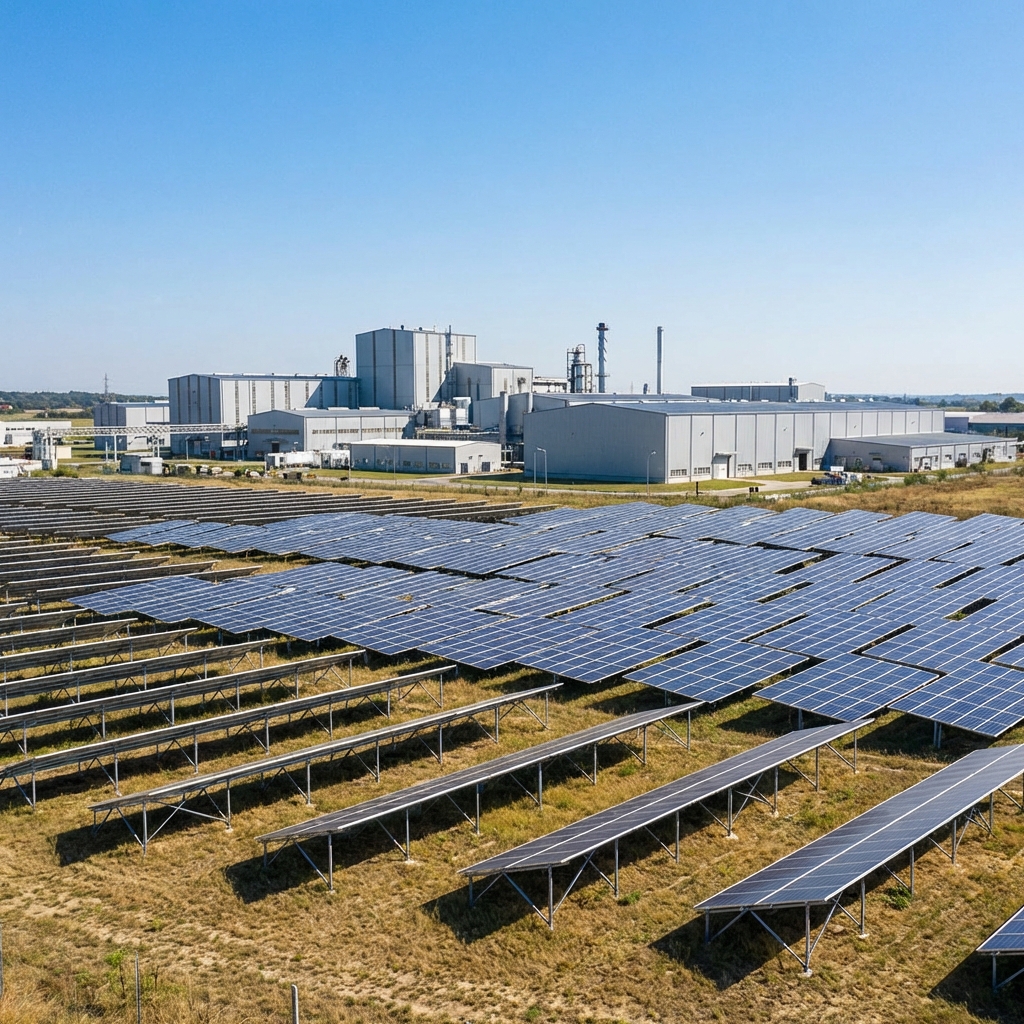
Solar plant on your own premises — rooftop or ground-mounted within factory campus. Power flows directly to your load center without touching the grid.
Key Advantages
- Zero open access charges
- Instant power delivery
- No wheeling losses
- Full operational control
- No regulatory approvals
Savings
40-60%
Scale
100 kWp - 10 MWp
Off-Site Captive
Remote Captive via Open Access
Solar plant at a remote location with better solar resource. Power is wheeled through state grid via open access framework to your consumption point.
Key Advantages
- No space constraints
- Larger scale possible
- Better irradiance locations
- Same-state wheeling
- CSS/AS exemption
Savings
30-50%
Scale
5 MWp - 100+ MWp
Value Proposition
Why Choose Captive Solar?
Maximum Cost Savings
No CSS or AS for true captive. Combined with zero fuel cost, this delivers the highest savings among all procurement routes.
40-60%
Full Operational Control
Own and control the asset. Decide on maintenance, technology upgrades, and optimization strategies based on your priorities.
100%
Long-Term Tariff Hedge
Lock in generation cost for 25+ years. Unlike grid tariffs that rise 3-5% annually, your solar cost remains flat.
25 yrs
Accelerated Depreciation
Claim 40% depreciation in first year under Income Tax Act. Significantly reduces effective project cost.
40%
Carbon Neutral Operations
Claim I-RECs for 100% of generation. Meet RE100 commitments, CDP reporting, and SBTi targets.
100%
Energy Security
Reduce dependence on grid supply and expensive diesel backup. Solar provides predictable, reliable power.
Reliable
Legal Framework
Captive Eligibility Requirements
| Requirement | Criteria | Regulation |
|---|---|---|
| Ownership | At least 26% equity in generating SPV | Electricity Rules 2005 |
| Consumption | At least 51% of total generation | Electricity Rules 2005 |
| Proportionate | Consumption and equity must be proportionate | Electricity Rules 2005 |
| Location | Plant and consumer in same state | State OA Regulations |
| Open Access | Register with SLDC, obtain OA approval | SERC Regulations |
| Metering | Install ABT-compliant meters | CEA Regulations |
Implementation
Project Development Process
End-to-end timeline: 6-12 months
Feasibility Study
2-4 weeks
Site assessment, load profiling, regulatory review
SPV Formation
2-4 weeks
Company incorporation, equity structuring
Approvals
4-8 weeks
SLDC registration, connectivity, CEA intimation
Financing
4-6 weeks
Debt arrangement, equity infusion
EPC & Construction
4-8 months
Engineering, procurement, installation
Grid Sync & COD
2-4 weeks
Testing, certification, commercial operation

Questions
Frequently Asked Questions
What if I don't have land or rooftop space?
Set up an off-site captive plant at a remote location and wheel power via open access. We help identify suitable land parcels.
Can I sell excess power to the grid?
Captive plants are for self-consumption. Limited banking is allowed in some states. Check state policy for specifics.
What happens during monsoon or night?
You continue to draw from grid during non-solar hours. Solar offsets daytime consumption. Battery storage can extend usage.
Is captive power truly exempt from OA charges?
Yes, true captive (26% equity + 51% consumption) is exempt from CSS and AS. Wheeling charges still apply for off-site.
Can multiple consumers share a captive plant?
Yes, this is Group Captive. Each consumer must hold 26%+ equity and consume 51%+ of their proportionate share.
What is the typical project timeline?
End-to-end execution takes 6-12 months depending on scale, approvals, and site readiness.