Overview
What is Third-Party Open Access?
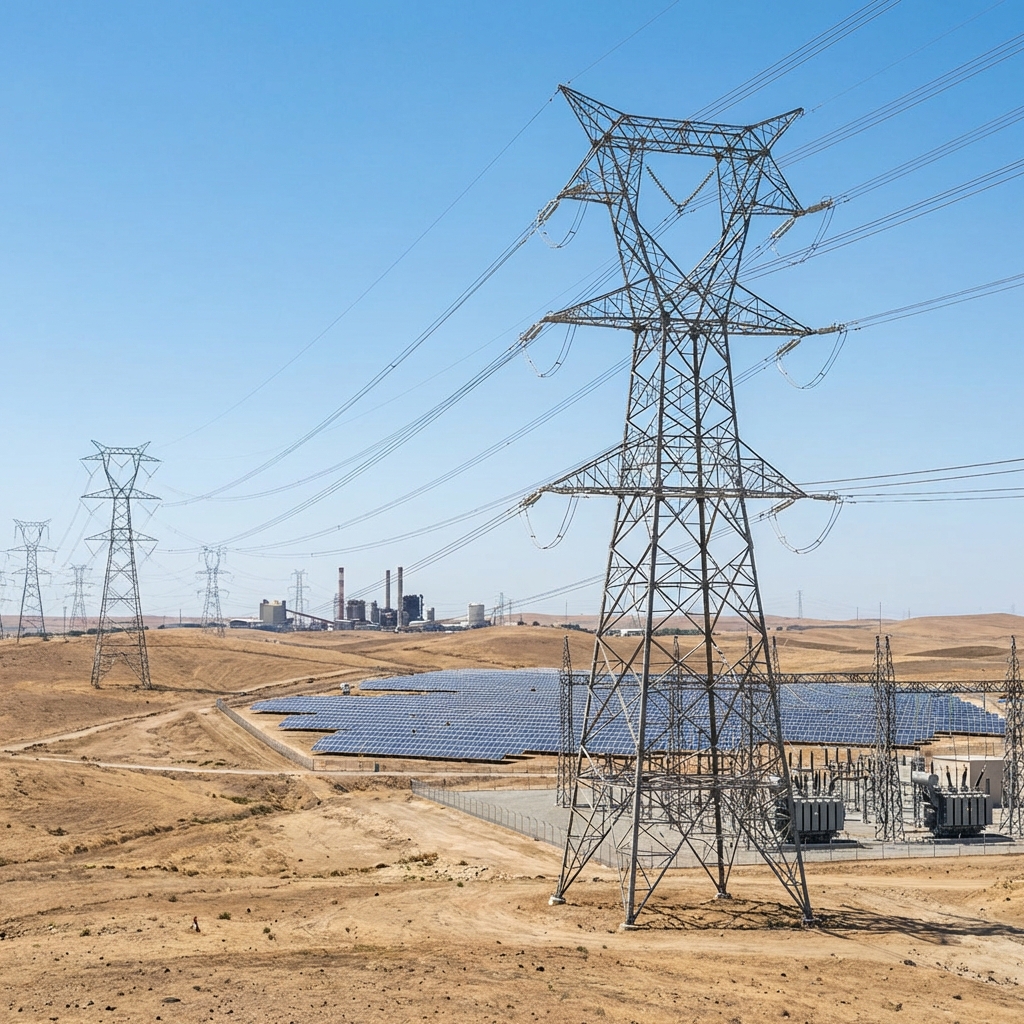
Third-Party Open Access is a framework under the Electricity Act 2003 allowing consumers to purchase power from any generator by using the grid as a common carrier.
Solar Generator
Injects power
Grid Network
STU / DISCOM
Your Factory
Draws power
You pay generator for solar power at negotiated tariff, and pay DISCOM/STU for network usage. Net cost is typically 15-30% lower than grid tariff.
Value Proposition
Why Third-Party Open Access?
Zero Capital Investment
No equity, no financing, no asset on balance sheet. Simply sign a PPA and start receiving solar power.
₹0
Immediate Savings
Solar tariff plus OA charges still 15-30% lower than grid tariff. Savings from day one.
15-30%
Zero Operational Risk
No ownership means no asset risk, no O&M responsibility, no performance risk.
Zero Risk
Fast Deployment
Tie-up with existing plants. Skip 6-12 month development. Go live in 2-4 weeks.
2-4 wks
Flexibility
Easy to scale up by adding PPAs. Shorter contracts (10-15 years). Exit provisions available.
Flexible
Green Credentials
Receive I-RECs for consumption. Meet RE100, CDP, SBTi with verifiable renewable energy.
100%
The Process
How It Works
Identify Generator
We connect you with IPPs having available capacity in your state.
Negotiate PPA
Agree on tariff, tenure (10-25 years), minimum offtake, terms.
OA Application
Apply for open access with SLDC, submit BG, scheduling agreement.
Metering
Install ABT-compliant meters at drawl point.
Scheduling
Generator submits day-ahead schedule, you draw scheduled power.
Billing
Receive bills for solar power + wheeling + CSS/AS + SLDC fees.
State Analysis
Open Access by State
| State | Total OA Charges | Assessment |
|---|---|---|
| Karnataka | ₹0.97-1.17 | Excellent |
| Rajasthan | ₹0.55-1.72 | Good |
| Gujarat | ₹1.55-2.05 | Moderate |
| Maharashtra | ₹2.85-4.15 | Challenging |
| Tamil Nadu | ₹1.50-2.50 | Moderate |
| Andhra Pradesh | ₹3.05-4.20 | Challenging |
| Telangana | ₹2.00-3.05 | Moderate |
| Madhya Pradesh | ₹1.43-1.98 | Good |
*Indicative for FY 2024-25. Subject to SERC revisions.
Key Considerations
What You Should Know
CSS & AS Applicable
Unlike captive, third-party attracts full CSS and AS. Can be ₹1-4/kWh in some states.
Same State Preferred
Intrastate is simpler and cheaper. Interstate involves additional charges and complexity.
No Depreciation
Since you don't own the asset, no depreciation benefit under Income Tax Act.
Regulatory Uncertainty
OA charges revised annually by SERCs. PPA should have charge pass-through provisions.
Minimum Offtake
PPAs require minimum offtake (70-80%). Liable for minimum charges if consumption drops.
Scheduling Discipline
Day-ahead scheduling mandatory. Deviations attract UI charges.
Comparison
Third-Party vs Captive
| Feature | Third-Party | Captive |
|---|---|---|
| Investment | Zero | 26-100% |
| Savings | 15-30% | 30-60% |
| CSS/AS | Applicable | Exempt |
| Risk | Zero | Ownership risk |
| Depreciation | No | 40% Y1 |
| Control | None | Full/Partial |
| Deploy Time | 2-4 weeks | 6-12 months |
| Exit | Easier | Harder |
Implementation
Getting Started
End-to-end timeline: 2-4 months
Assessment
1-2 weeks
Analyze load profile, demand, voltage level
State Review
1 week
Evaluate OA charges, banking, regulations
Generator Matching
2-3 weeks
Shortlist suitable IPPs
PPA Negotiation
2-4 weeks
Finalize tariff, terms, clauses
OA Application
4-8 weeks
SLDC registration, agreements
Go Live
2-3 weeks
Meters, testing, billing start
Questions
Frequently Asked Questions
What is minimum consumption for open access?
Most states require 1 MW contracted demand. Some allow 500 kW or 100 kW for renewables.
Can I source from another state?
Yes, via ISTS. But involves additional charges and complexity. Intrastate recommended.
What if generator fails to supply?
You draw from grid at normal tariff. Generator may owe compensation per PPA terms.
How is billing structured?
Two bills: (1) Generator for solar energy, (2) DISCOM for wheeling, CSS, AS, standby.
Can CSS/AS change during PPA?
Yes, revised annually. PPA should have charge pass-through provisions.
What is banking?
Bank excess energy with DISCOM to draw later. Charges 2-10% of banked energy. Not all states allow.
How does this compare to rooftop solar?
Rooftop gives 40-60% savings with investment. Third-party gives 15-30% with zero investment.
Can I combine with captive?
Yes, many do both — rooftop for base load, third-party OA for additional green power.